The difference between self-harm and a suicide attempt (and why it changes your treatment)
Aug 03, 2026When a teen tells us they've been hurting themselves, our nervous system tends to jump to one word: suicide. It's an understandable reflex. It's also, clinically, not always accurate, and the difference matters enormously for what we do next.
Non-suicidal self-injury, or NSSI, is behavior a person uses to hurt themselves without the intent to die. It usually serves a function: regulating overwhelming emotion, feeling something when numb, or exerting a small measure of control in a life that feels out of control. Suicidal behavior, by contrast, carries intent to end one's life. The two can coexist. They are not the same, and they call for different clinical responses.
Collapsing them is a common mistake, and it can cost us the therapeutic relationship. A teen who self-injures to cope, and who is met with an immediate crisis response every time, learns something painful: that honesty gets them managed rather than understood. Many stop disclosing.
For trans youth, the picture is more layered still. Research points to specific thematic drivers of self-injury in this population: the double stigma of being both trans and struggling, the drive toward self-actualization, a fraught relationship with the body, transition as a turning point, and a pervasive lack of control. Minority stress sits underneath all of it. When a teen faces isolation, discrimination, and messages that they are a burden, the risk landscape shifts.
So what does competent care look like? It starts with the ability to distinguish suicidal ideation from intent from an actual attempt, because each requires a different response. It includes a clear decision-making process for when to safety plan and when to facilitate an emergency department referral for a 5585 or 5150 assessment. And it includes harm reduction: helping a teen build replacement coping strategies rather than demanding they simply stop.
None of this is intuitive. Most of us were never taught it directly.
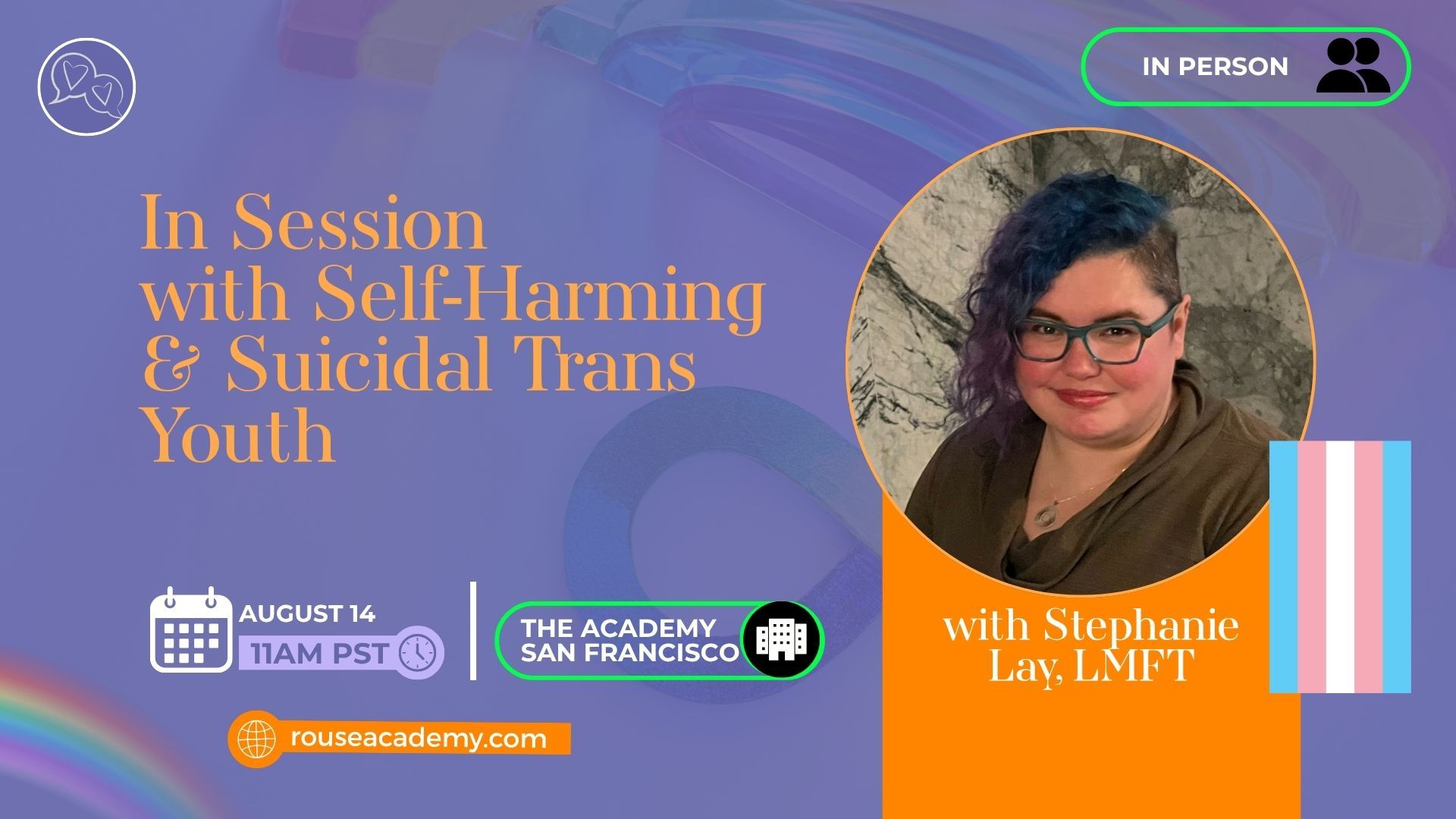
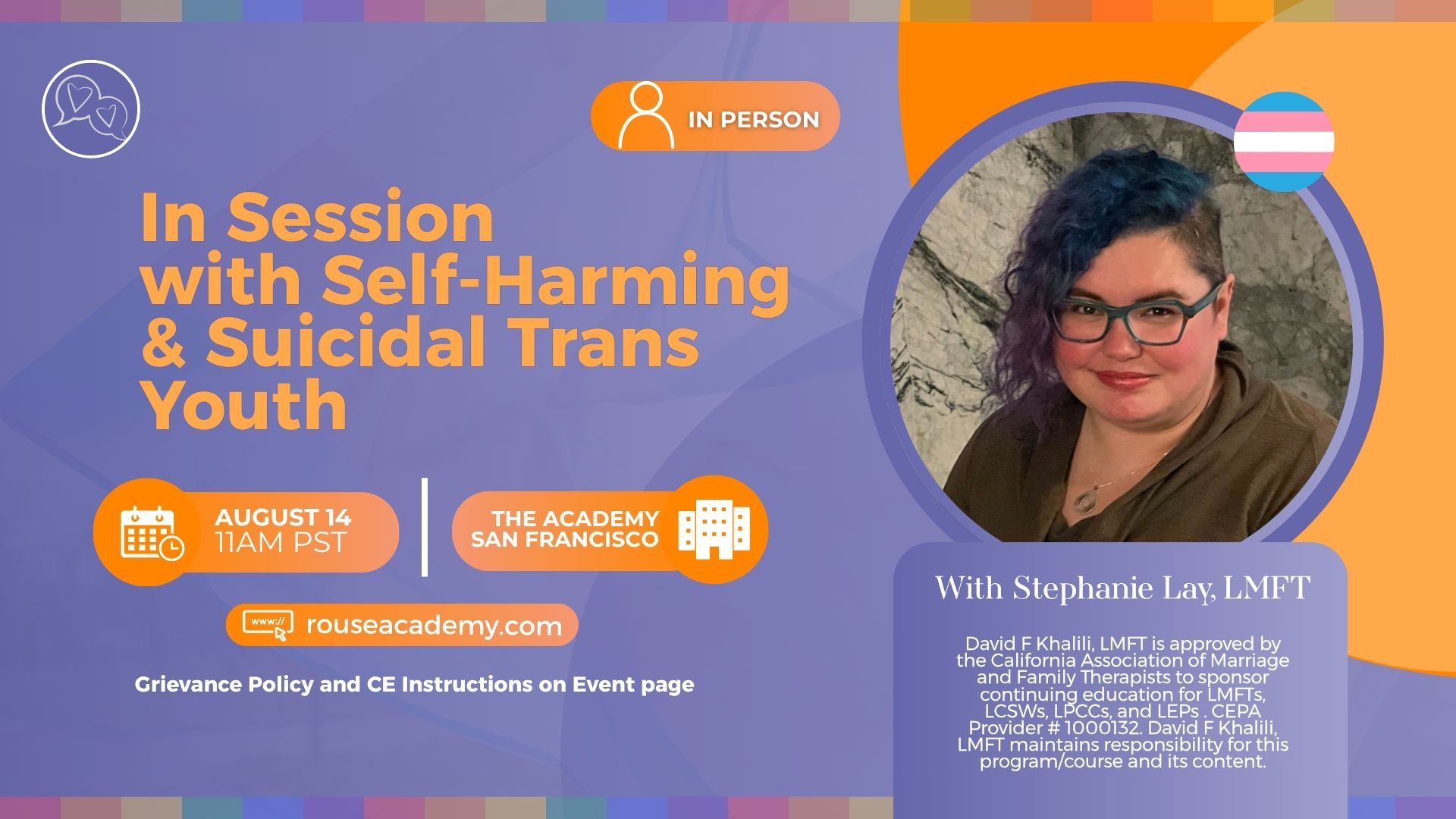
That's why Stephanie Lay, LMFT is teaching In Session with Self-Harming & Suicidal Trans Youth in person in San Francisco on August 14. Stephanie has done suicide-risk assessment on a behavioral emergency response team and supported high-needs youth on inpatient units. The training covers the person-centered model of self-injury recovery, expressive arts interventions, and the safety triage skills above, and it carries 4 CEs.
The next teen who discloses to you deserves a clinician who knows the difference. If that's the clinician you want to be, come sit in the room.
Shame less, love more.
Find your happy spots through our erotic educational courses
- Learn how mindfulness helps with sexual anxiety
-
Address performance anxiety
-
Communication Techniques for Sexual Needs
-
Sex and Intimacy for Survivors
-
Overview of Sexual Anxiety
Receive our 2-page overview completely changing how you view sex.
Receive updates through our weekly newsletter!
We hate SPAM. We will never sell your information, for any reason.